Best AI 3D model generators in 2026, compared
Meshy, Tripo, Rodin, Hunyuan3D, TRELLIS.2 and Stable Fast 3D compared by input, output, price and licence, so you can pick the right one for your job.
23 September 2026 · updated 3 October 2026 · 4 min read
Every generator page shows the same spinning demo, so the useful comparison is not "which is best" but "which is built for the job I have". The jobs differ more than the demos do.
The jobs
A quick mesh from one photo. You have a picture of a thing and want a thing. Speed and a closed, printable mesh matter; the back can be a guess.
A production asset. Clean topology, proper UVs, a full PBR set. The model goes into a game or a product page and will be looked at from every side.
Texturing a mesh you already have. You modelled it; you want the surface painted from a prompt or a reference.
Doing it in bulk, or in your own pipeline. An API, a licence that lets you ship, and a cost per model you can budget.
The engines
| Engine | Takes | Gives | Runs where | Licence and cost |
|---|---|---|---|---|
| Stable Fast 3D (Stability AI) | one image | textured GLB, ~10 s | open weights | community licence: free for individuals and small companies, enterprise licence above a revenue threshold; outputs are yours |
| TRELLIS.2 (Microsoft) | one image | mesh with PBR materials, high detail, ~30 s at 512, ~1 min at 1024 | open weights; free here | MIT, the most permissive of the lot |
| Hunyuan3D 2.1 (Tencent) | one or several images; a mesh to paint | mesh + PBR via its own paint pipeline, minutes | open weights | community licence, not granted in the EU, the UK or South Korea |
| Meshy | text, image, several images; existing meshes for retexture | mesh + PBR up to 8K textures, rigging, animation | hosted | subscription with credits; terms forbid reselling its output through your own service |
| Tripo | text, image, several images; retexture, rig | mesh + PBR, styles, quad topology option | hosted, with an API | free tier plus credits; API terms allow building products on it |
| Rodin (Hyper3D) | text, image, several images | mesh + PBR, strong on detail and topology | hosted, with an API | subscription plus API credits |
Prices move every quarter; the shapes of the offers do not. Hosted engines charge per model and give you multi-view input, retexturing and rigging. Open-weights engines are free if you run them and are one photo in, one mesh out.
Which one for which job
Quick mesh from a photo: TRELLIS.2 at its lowest resolution. About thirty seconds for a detailed mesh with real PBR maps, and it is what the free generator runs on. Stable Fast 3D is faster still, ten seconds for a closed mesh with a texture, but the gap in quality is large enough that we stopped offering it.
Production asset: the hosted engines, with several photos. Multi-view input is what turns "the back is a guess" into "the back is the second photo". Tripo and Rodin both offer quad topology and clean UVs; Meshy's textures go highest in resolution. This is also where credits are worth paying: the difference between a $0 mesh and a $0.50 mesh is a day of cleanup.
Texturing your own mesh: Meshy and Tripo if you want it hosted with an API. Of the open models, Hunyuan3D-Paint 2.1 kept the reference's colours most faithfully in our tests, but its licence is not granted in the EU, the UK or South Korea. TRELLIS.2's own texturing pipeline is MIT, takes about half a minute and paints every side of the mesh, the back included; its colours come out a little darker than the reference. It is what Retexture runs, free within a daily allowance. MV-Adapter (MIT) is the other permissive option.
Bulk and pipelines: Tripo or Rodin by API, or TRELLIS.2 on your own GPU. Meshy is deliberately left off that list because its terms do not allow reselling its output through a service of your own.
What "open weights" buys you
Three things. You know what the model does, because the code is public. You can run it where you like, which is how a site like this one can give it away. And, licence permitting, nobody can change the terms under you. The trade is that you get the model as published: no multi-view unless the authors trained one, no rigging, no support.
It is worth reading the licence rather than the word "open". TRELLIS.2 is MIT and asks nothing. Stable Fast 3D is free until your company is large. Hunyuan3D is generous about commercial use, but its licence is not granted in the EU, the UK or South Korea, so check where you are before building on it.
How this site picks
One engine per job, the best open one we can run for free, and no dropdown to second-guess. Image to 3D and Text to 3D run TRELLIS.2; Text to 3D paints the photo first with FLUX.2 klein. Retexture runs TRELLIS.2's texturing pipeline. All of them run on shared GPUs on Hugging Face, on a free daily allowance.
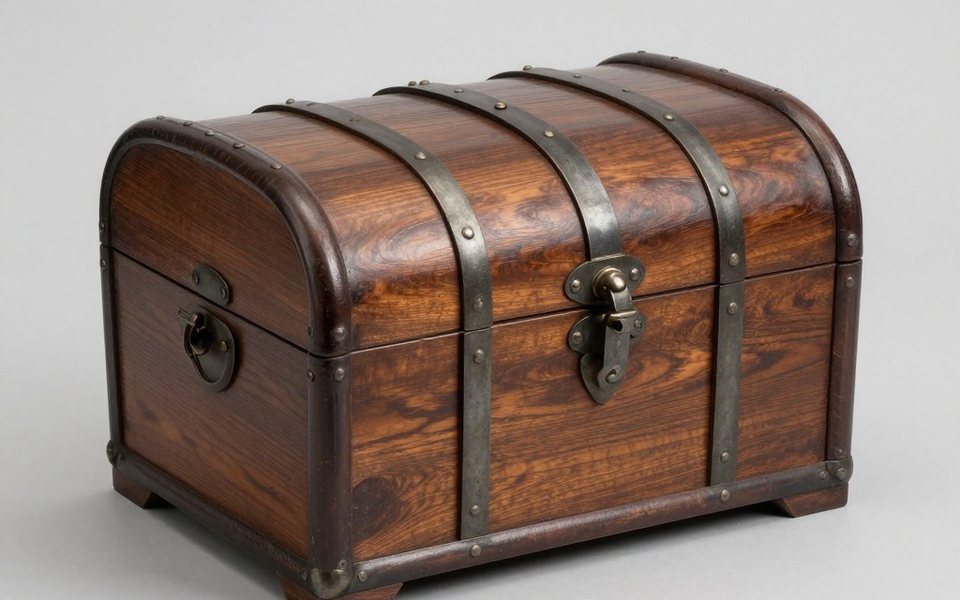
The photo
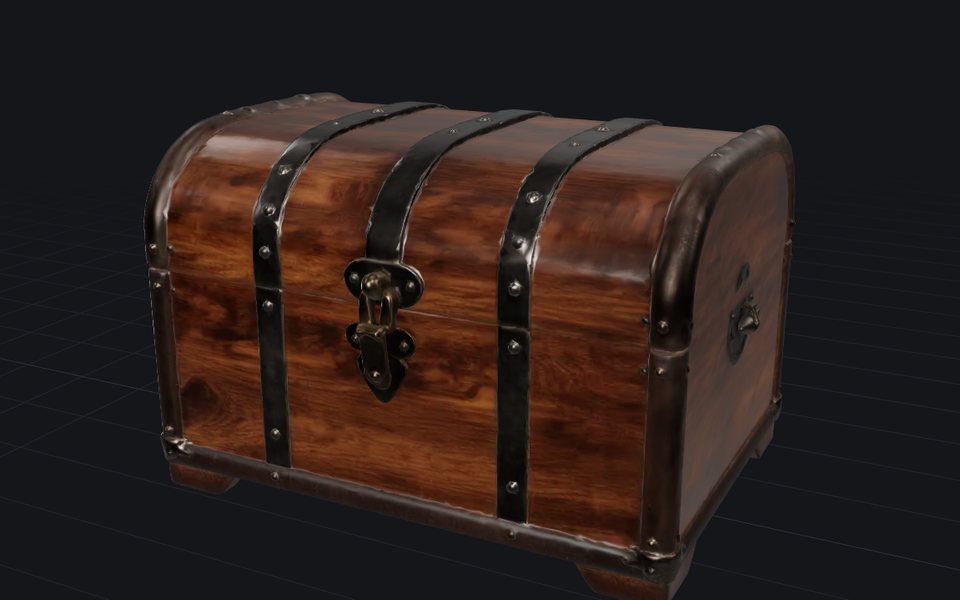
TRELLIS.2, 30 s
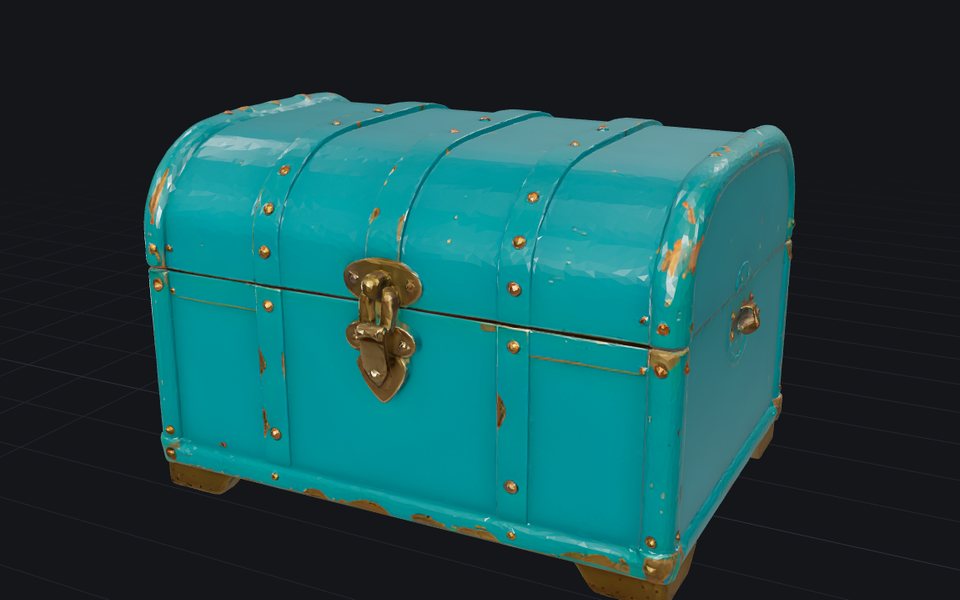
Hunyuan3D-Paint
When a better open model appears, it replaces the one before. The tools around the generators, Repair, Remesh, Reduce, Convert and Print cost, do not care which engine made the file, or whether one did.
More from the blog
29 September 2026 · 4 min
What is retopology, and when automatic is enough
Retopology rebuilds a messy mesh as clean, even quads. Why models need it, manual versus automatic, the tools in Blender and beyond, and where they fail.
29 September 2026 · 5 min
What is a normal map, and why is it purple?
A normal map fakes bumps without adding polygons. How its colours encode direction, OpenGL versus DirectX, normal versus bump, and how to make one.
24 September 2026 · 4 min
How image to 3D works, and why the back is a guess
One photo in, a textured mesh out in about half a minute. What happens in between, what the model cannot know, and the photo that gives it a chance.